An update on hydropower projects in Uttarakhand - to be or not to be
Himalayan power projects - a Himalayan problem now
Read more on - Polity | Economy | Schemes | S&T | Environment
- The story: The story of a steady deterioration in Himalayan ecology due to infrastructure and power projects is now well-known. Now, the Union Environment ministry has recommended the completion of seven hydropower projects in upper Ganga in Uttarakhand. These were put on hold by the Supreme Court after the Kedarnath tragedy in 2013.
- Kedarnath floods: The floods of 2013 killed at least 5,000 people in the region. The Supreme Court halted the development of hydroelectric projects in Uttarakhand. A review by the Environment Ministry on the role such projects had played in amplifying the disaster was pending.
- Chopra Committee - A 17-member expert committee, led by environmentalist Ravi Chopra, was set up, to examine the role of 24 such proposed hydroelectric projects in the Alaknanda and Bhagirathi basin, which contains the Ganga and several tributaries.
- The Chopra committee concluded that 23 projects would have an “irreversible impact” on the ecology of the region.
- Vinod Tare Committee - Six private developers whose projects had already been cleared challenged this. The SC directed a new committee to be set up to examine their case. This was led by Vinod Tare, and concluded that these projects could have a significant environmental impact.
- BP Das Committee - The Environment Ministry in 2015 set up yet another committee, led by B.P. Das which cleared all 6 projects with design modifications. The Centre says that it was not too keen on new hydropower projects and was only permitting those that are at least 50% complete to go ahead.
- Specific projects: The seven projects approved are - Vishnugad Pipalkoti (444 MW) on Alaknanda river, Tapovan Vishnugad (520 MW) on Dhauliganga river, Singoli Bhatwari (99 MW) on Mandakini river, Phata-Buyong (76 MW) on Mandakini river, Tehri Stage II (1000 MW) on Bhagirathi river, Madhyamaheshwar (15 MW) on Madhmaheshwar Ganga, and Kaliganga II (4.5 MW) on Kaliganga river.
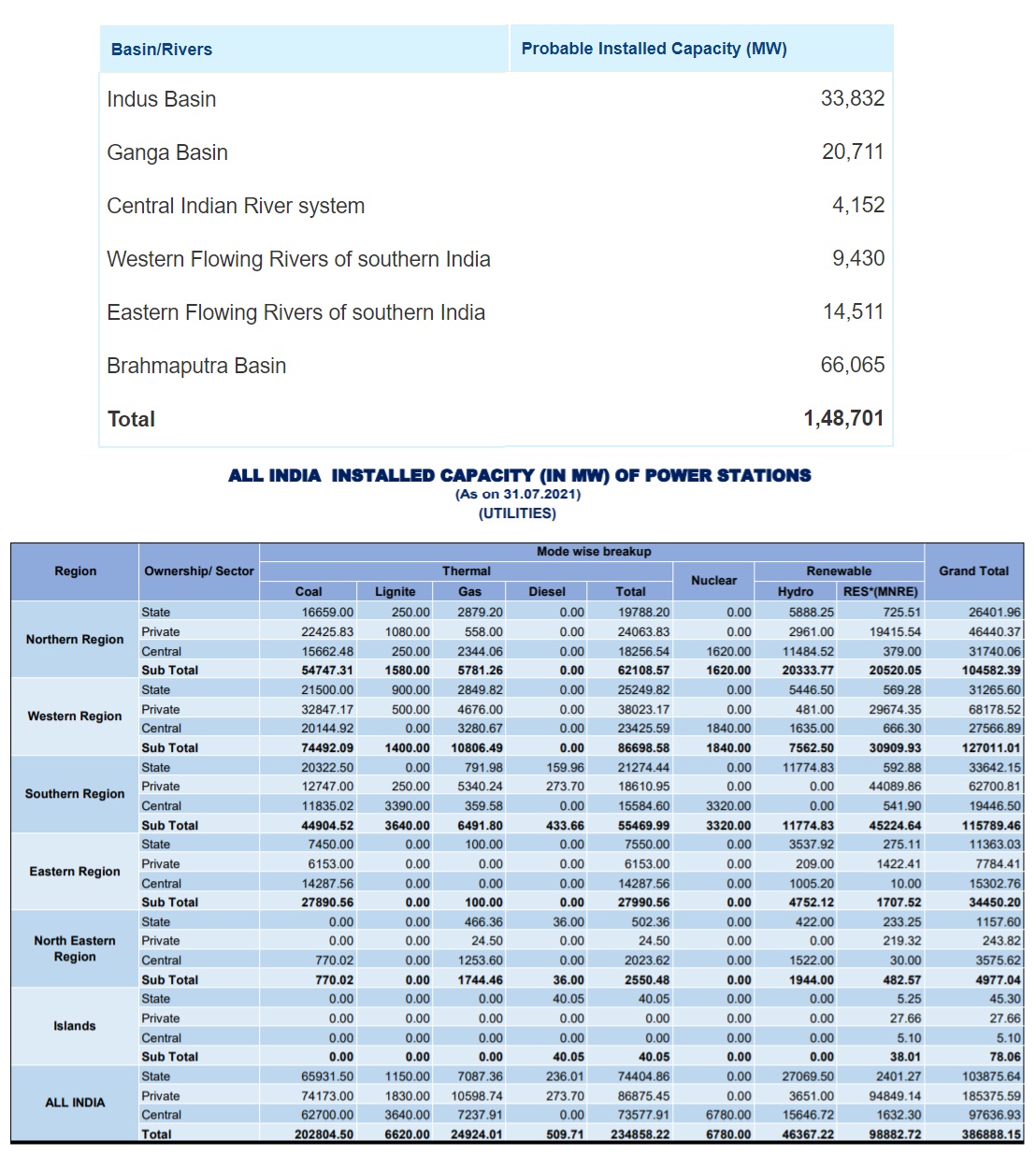
- Why the love for hydro: India has a huge hydropower potential, but hydropower currently accounts for only 12% of India’s total energy production. Himalayan states offer a steep terrain of the mountains, and the nature of the Himalayan rivers is conducive. Since hydropower is a renewable source of power, and hydropower projects help earn carbon credits, the support is high.
- Uttarakhand government pays over Rs.1,000 crore annually to purchase electricity. If the projects are cancelled, it is harder for it to meet the development obligations.
- The proposed projects being built by private companies allot only a limited percentage of their produced power for the State. The State, on its own, takes on massive environmental risk without being adequately compensated for it.
- Risks: Building dams is a construction-intensive activity, involving blasting, excavation, debris dumping, movement of heavy machinery, diversion of forests and rivers. This can cumulatively impact Himalayan ecology. Glacier retreat and permafrost thaw are projected to decrease the stability of mountain slopes and increase the number and area of glacier lakes. The Himalayan belt has over 2,300 glacial lakes that are melting due to global warming. The thermal profile of ice is increasing i.e., the temperature of ice that used to range from -6 to -20 °C, is now -2°C, making it more susceptible to melting.
- Climate change has also driven erratic weather patterns like increased snowfall and rainfall. These changing climate phenomena make infrastructure projects in the Himalayan regions risky.
- With increased instances of cloudbursts, and intense spells of rainfall and avalanches, residents of the region are at increased risk. Cleanliness of the Ganga is premised on minimum levels of water flow in all seasons and the proposed projects could hinder this.
- Summary: Experts suggest no hydropower development beyond an elevation of 2,200 metre in the Himalayan region. The environmental, ecological, topographical limitations of the region must be respected.
- EXAM QUESTIONS: (1) Explain the differences between various types of renewable power projects. (2) How can the energy needs be balanced with environmental concerns? Explain. (3) Locals across Uttarakhand have objected to the rampant spread of power and infra projects. Why is their voice not heard across India? Explain the social and political dynamic.
#Uttarakhand #PowerGeneration #Hydropower #Infrastructure #EnvironmentandEcology